

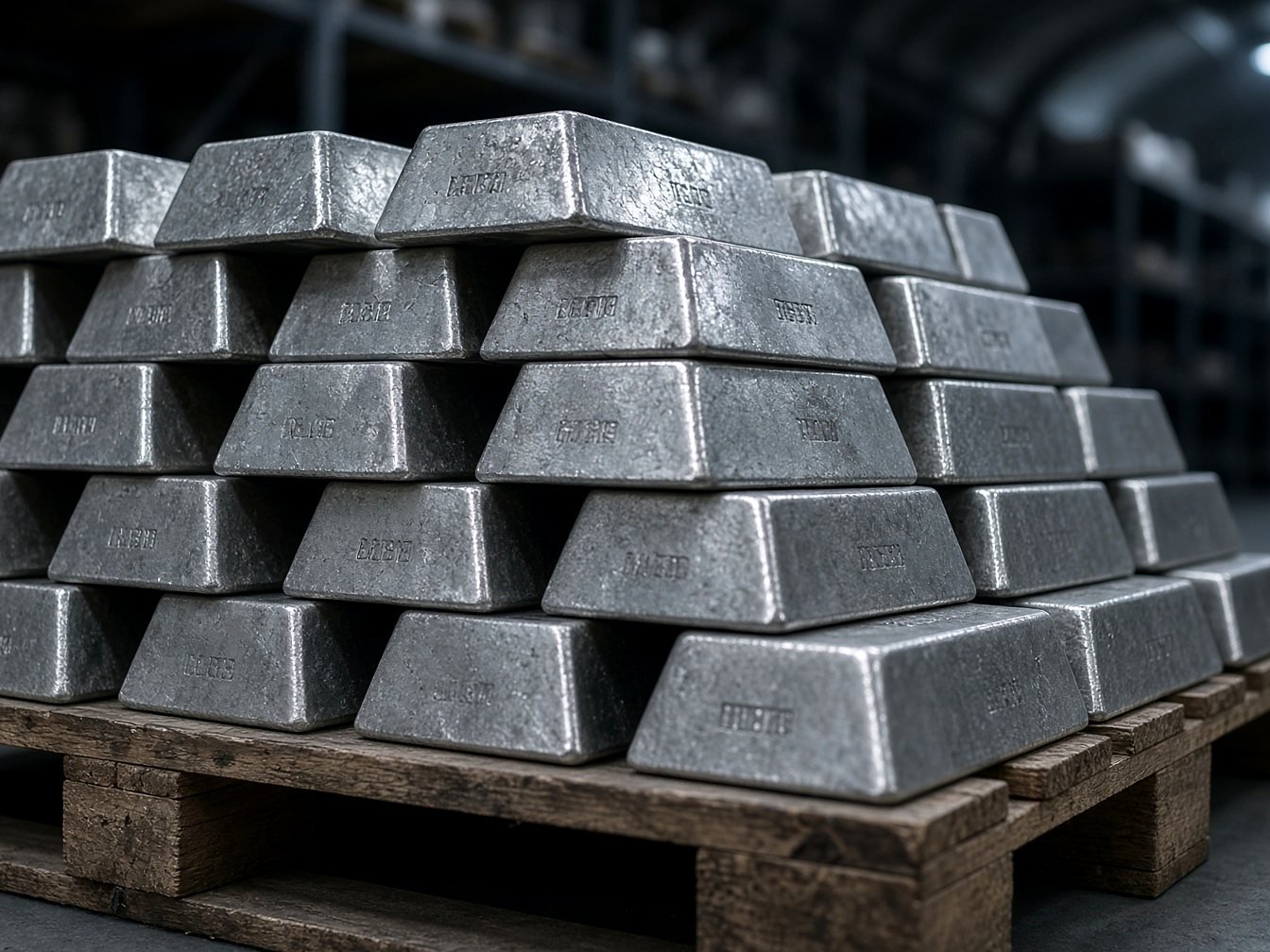
Is there a silver shortage? Yes and no, and the difference is the whole story. There’s no shortage in the sense of empty vaults or dealers turning you away. What’s real is a supply-demand deficit: the silver market has now run short of metal for six straight years, with 2026 forecast at a 67-million-ounce shortfall by the Silver Institute and Metals Focus. That gap gets covered by drawing down aboveground stockpiles, not by anyone going without. So the honest framing isn’t “the world is out of silver.” It’s “the world keeps eating into its savings.”
Is there a silver shortage in 2026?
There is a structural silver deficit, not a physical scarcity. In 2026 the silver market is forecast to consume about 67 million more ounces than it produces, the sixth consecutive annual deficit (Silver Institute/Metals Focus, Feb 2026). That flow shortfall is filled from existing aboveground inventories, so metal stays available even as the cushion shrinks.
We think the confusion comes from mixing up two different things. A shortage, in plain English, means you can’t get the stuff. A deficit is an accounting statement about a single year: how much came out of the ground and got recycled, versus how much got bought and used. You can run a deficit for years while metal stays on shelves, because there’s a large existing pile to draw from. That’s where silver sits right now.
Here’s the number that keeps everyone honest: total silver supply in 2026 is forecast at roughly 1.05 billion ounces, a decade high (Silver Institute, Feb 2026). Supply is near its highest in ten years, and the market is still short. The deficit exists because demand runs even hotter than a decade-high supply can meet.
What a silver deficit actually means
A deficit is a flow, not a stockpile. Think of a bathtub. Supply is the faucet, demand is the drain, and aboveground inventory is the water already in the tub. A deficit means the drain pulls faster than the faucet fills. The tub doesn’t run dry in a year, but keep it up long enough and the level drops low enough to notice.
The cumulative math is where it gets interesting. Since 2021, the silver market has drawn down close to 762 million ounces to cover its string of deficits (Silver Institute/Metals Focus, 2026). That’s the water that’s left the tub. The 2025 deficit was revised to 46.3 million ounces, and 2026 is forecast bigger at 67 million (Silver Institute, Feb 2026). Each year the buffer that absorbs these shortfalls gets thinner.
What does that mean for you as a buyer or holder?
- Availability: Coins and bars stay available. A flow deficit doesn’t empty dealer inventories overnight. If aboveground stocks ever got tight enough, you’d see it first in premiums and delivery delays, not in a hard “sold out” sign.
- Price: A persistent deficit is a slow, structural tailwind, not an instant trigger. Prices respond to it eventually as the visible cushion of registered and reported stocks shrinks and buyers compete harder for delivery.
- Timing: Deficits don’t set a date. Silver ran deficits through 2025 and still round-tripped from an all-time high of $121.62 in late January 2026 down to $56.63 by June 25 (Disruption Banking, Jun 25, 2026). Fundamentals and price can diverge for a long time.
The numbers behind the 2026 shortfall
Let’s put the demand side on the table, because that’s what’s driving the gap. Two forces pull in opposite directions.
- Industrial demand is the heavyweight, roughly 58% of total silver demand. It’s forecast to slip about 2% in 2026 to around 650 million ounces (Silver Institute, Feb 2026). So the biggest bucket is actually shrinking a little this year.
- Physical investment demand is the swing factor. It’s forecast to jump about 20% to 227 million ounces in 2026 (Silver Institute, Feb 2026). Coins, bars, and retail buying are picking up the slack and then some.
That’s the counterintuitive part. Industrial use, the largest single source of demand, is easing, yet the overall market stays in deficit because investors are stepping in hard. Philip Newman of Metals Focus framed the handoff directly.
“You could see losses in the industrial sectors being mopped up by the retail investment.” Philip Newman, Managing Director, Metals Focus (Kitco, Apr 15, 2026)
He didn’t stop there on the investment side.
“I think you’re going to see dramatically higher spending by retail investors.” Philip Newman, Managing Director, Metals Focus (Kitco, Apr 15, 2026)
If that read holds, the deficit isn’t going anywhere soon, even with industrial softness. For more on where these two forces net out, see our silver price forecast for 2026.
Why silver supply can’t just ramp up
Here’s the structural fact that makes silver different from a normal commodity: about 74% of mined silver comes out of the ground as a byproduct of mining something else, mostly copper, lead, zinc, and gold (Silver Institute/Metals Focus, 2026). Only a minority of the world’s silver comes from mines that exist primarily to produce silver.
That one detail explains a lot. When silver’s price rips higher, you’d expect miners to dig more of it. But a copper miner doesn’t fire up new capacity because silver got expensive. They dig based on copper economics. The silver just falls out as a bonus. So supply is stubbornly slow to respond to price, what economists call inelastic. A $60 silver price and a $30 silver price pull roughly the same tonnage out of byproduct operations.
Stack that against the demand picture and the deficit’s persistence makes sense:
- Supply is near a decade high at ~1.05 billion ounces, yet can’t easily grow further because most of it isn’t in silver’s control (Silver Institute, Feb 2026).
- Demand keeps finding new sources, with investment offsetting industrial softness.
- The gap gets filled from a finite, shrinking pile of aboveground metal.
None of this guarantees higher prices tomorrow. It does explain why the deficit has lasted six years and why it’s hard to close from the supply side.
The bull case and the bear case
We’d be breaking our own rules if we only told you one side. Here’s the honest split.
The bull case. Six straight deficits and a 762-million-ounce cumulative draw since 2021 mean the buffer is genuinely smaller than it was. Supply can’t respond because it’s byproduct metal. Investment demand is accelerating, up a forecast 20% this year. If the gold-silver ratio compresses, silver has room to run: Bank of America has floated roughly $135 an ounce within 12 months if the ratio reverts toward 2011’s 32:1 (congress.net, Jul 6, 2026). MKS PAMP’s Nicky Shiels put the psychological case bluntly: “The January high above $120/oz can absolutely be revisited” (deVere Group, Jun 15, 2026).
The bear case. A deficit is not the same as a shortage, and price knows it. Silver still fell nearly in half from its January peak to its June low while the deficit was in full swing. Aboveground stocks are large enough that “seizing up” is a risk, not a certainty. Industrial demand, the biggest bucket, is contracting. And plenty of analysts see silver drifting: StoneX’s Rhona O’Connell has silver at $55 to $60 by year-end 2026 (Kitco, Jul 10, 2026), while HSBC’s James Steel expects the gold-silver ratio to widen, “allowing silver to ease even if gold rallies” (deVere Group, Jun 15, 2026).
Our take: the deficit is real and it matters, but it’s a slow-burn fundamental, not a fuse. Treat anyone selling you “the vaults are empty, buy now” with suspicion. The truer statement is that silver’s savings account has been drawn down for six years running, and that setup rewards patience more than panic. If you’re weighing an entry, our guide on how to buy silver covers the mechanics.
Frequently asked questions
Is there really a silver shortage right now?
There’s a market deficit, not a physical shortage. The 2026 silver market is forecast to run 67 million ounces short of demand, the sixth straight annual deficit (Silver Institute/Metals Focus, Feb 2026). That gap is covered from aboveground stockpiles, so metal remains available to buy.
What is the difference between a silver deficit and a silver shortage?
A deficit is a one-year flow: demand exceeds new supply, and the difference comes from existing inventory. A shortage means you physically can’t get the metal. Silver is running deficits while total supply sits near a decade high of about 1.05 billion ounces (Silver Institute, Feb 2026), so it’s the former.
Why doesn’t silver mining increase to close the deficit?
Because roughly 74% of mined silver is a byproduct of mining copper, lead, zinc, and gold (Silver Institute/Metals Focus, 2026). Those mines run on the economics of the primary metal, so a higher silver price doesn’t reliably pull out more silver. Supply is inelastic.
Does a supply deficit mean the silver price has to go up?
Not on any schedule. Silver ran deficits through 2025 and still fell from $121.62 in January 2026 to $56.63 by June 25 (Disruption Banking, Jun 25, 2026). A deficit is a structural tailwind that pressures aboveground stocks over time, but macro forces like real yields and the dollar can dominate for long stretches.
How long can silver keep running a deficit?
Longer than most people expect, as long as aboveground inventory lasts. The cumulative draw since 2021 is near 762 million ounces (Silver Institute/Metals Focus, 2026). Each deficit year thins the buffer, which is the real thing to watch. See the Silver Institute’s 2026 outlook for the full breakdown.
By the Commodities Unfiltered desk. Last updated July 2026.
This is market analysis, not investment advice.
Leave a Reply