

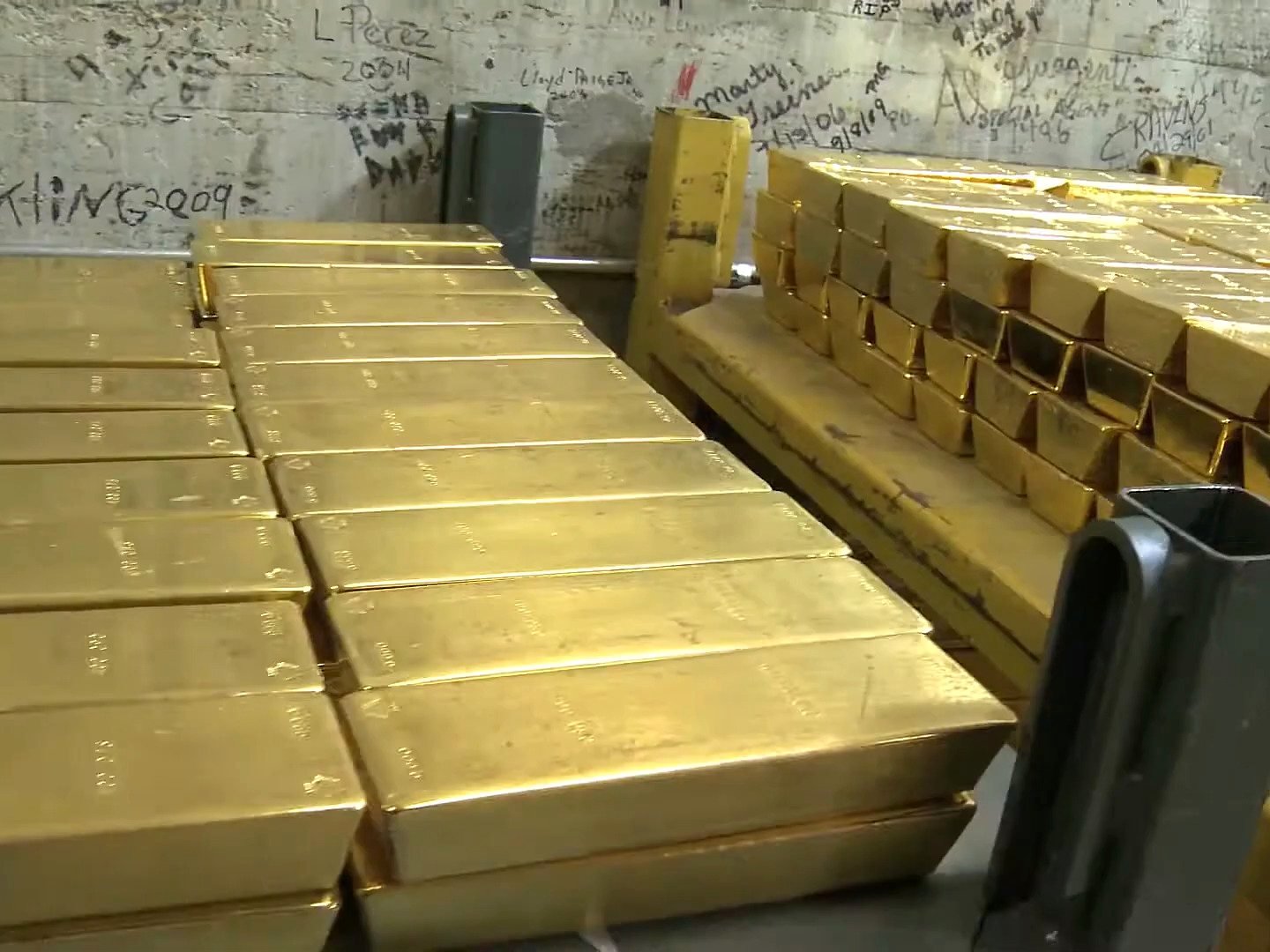
Should I buy gold now? After the 2026 sell-off, the honest answer depends on two things: how long you can hold, and whether you can stomach another leg down. Gold trades near $4,050, off about 25% from its January all-time high near $5,600 (Kitco, Jul 16, 2026). Q2 was the worst quarter for gold since 2013, down 14.1% (Kitco/Invesco, Jul 8, 2026). That’s not a reason to buy or to run. It’s a reason to have a plan.
Should you buy gold now?
Buying gold now makes sense if your time horizon runs years, not months, and you size the position so a further 15% drop won’t force a sale. Gold trades near $4,050, down about 25% from January’s $5,600 high. Dollar-cost averaging beats guessing the exact bottom.
That’s the short version. The longer version is that nobody rings a bell at the low, and the people telling you they can time it are usually selling something. What we can do is weigh the setup honestly. Right now the bull case and the bear case are closer to even than the headlines suggest, which is exactly why a framework matters more than a hot take.
What the 2026 sell-off actually was
Gold peaked around $5,600 in January 2026, then rolled over hard. The trigger was macro, not a change in the metal’s long-term story. A hawkish new Fed chair, an energy-inflation shock out of the Strait of Hormuz, and a firmer dollar pushed real yields up, and gold pays no yield. By June 24 it dipped below $4,000 for the first time since November 2025, closing Q2 at $4,008 (Kitco/Invesco, Jul 8, 2026).
Here’s the part the doom headlines skip. Even after a 14.1% quarter, gold was still up 21.3% over the prior 12 months (Kitco/Invesco, Jul 8, 2026). A correction inside a multi-year advance looks and feels exactly like this. The question is whether the froth is gone or whether more selling is coming.
On the froth question, StoneX’s Rhona O’Connell has a read worth sitting with:
“Weak handed and speculative holders have been washed out.”
Rhona O’Connell, Head of Market Analysis EMEA & Asia, StoneX, Kitco, Jul 10, 2026
Translation: the tourists who bought the top and panicked are largely out. That tends to happen near lows, not tops. It is not a guarantee. O’Connell herself still sees gold finishing 2026 near $4,000 and thinks the downside is marginally more likely than a sustained rally in the near term. Two things can be true at once.
The bull case and the bear case, side by side
The World Gold Council’s mid-year outlook laid out three scenarios (WGC, Jul 1, 2026). We find them more useful than any single price target because they frame the risk, not just the hope.
- Rangebound (base case): gold stays within roughly plus or minus 5% of about $4,100 under consensus macro.
- Bull case: up 5% to 20%. Gold resumes its uptrend around $4,500, though the WGC notes only a strong, clear signal would push it sustainably toward $5,000.
- Bear case: down 5% to 15%. If gold drops 10% to 15%, the WGC expects further downside would likely be limited.
Read that bear case again. The house that literally sells the gold story says a real drop from here caps out around 10% to 15%. That’s a floor estimate, not a promise, but it tells you the asymmetry. Sprott’s Paul Wong goes further on the timing:
“It’s harder and harder to push down the price of gold.”
Paul Wong, Managing Partner & Market Strategist, Sprott Inc., Kitco, Jul 20, 2026
Wong notes gold usually bottoms in summer, often around early August, and flags the late-August Jackson Hole meeting as a possible bottom catalyst. He sees the metal oversold at 2 to 3 standard deviations below trend. That’s a technical setup, not a green light, but it lines up with the seasonal read.
The bear rebuttal is simple and real. The Fed under Kevin Warsh has hikes on the table, markets price meaningful odds of a September move, and BofA expects three hikes in 2026 (Kitco, Jul 13, 2026). Higher-for-longer rates are a direct headwind. TD Securities’ Bart Melek thinks gold falls below $3,900 this year before it rallies (Kitco, Jun 29, 2026). If you buy at $4,050 and he’s right, you sit through a 4% to 5% paper loss first. Can you?
A buy-vs-wait framework you can actually use
Skip the market-timing fantasy. The people who buy well decide three things in advance: horizon, position size, and cadence. Here’s how we’d frame each.
- Time horizon. If you need the money inside 12 months, gold is the wrong tool right now, full stop. The near-term risk is two-sided and a September hike could hurt. If your horizon is 3 to 5 years or longer, a 25% drawdown from the top is the kind of entry buyers usually wish they’d taken, not one they regret.
- Position size. Size it so the bear case doesn’t wreck you. If the WGC’s 10% to 15% downside plays out, a position small enough that the loss is annoying rather than catastrophic is a position you’ll hold to the recovery. Most people fail here, not on entry price.
- Cadence (dollar-cost averaging). Splitting a purchase into tranches over weeks or months removes the pressure to nail the low. If Wong’s early-August bottom is right, you catch it. If Melek’s sub-$3,900 dip comes, you buy more of it cheaper. Averaging turns a scary single decision into a series of small ones.
None of this is personalized advice, and your situation isn’t ours to assess. It’s a way to convert a binary “buy or wait” into something you can execute without needing to be right about the exact bottom. For the mechanics of actually acquiring metal, see our guide on how to buy gold.
The trigger levels worth watching
If you’d rather wait for confirmation than average in, watch the levels the pros are watching. Fidelity International’s Ian Samson has been explicit about his plan:
“We have a plan to go overweight gold again. The question now is when to act.”
Ian Samson, Multi-Asset Portfolio Manager, Fidelity International, Kitco, Jul 16, 2026
Samson’s bullish trigger is gold clearing $4,300 (Kitco, Jul 16, 2026). That matters because it lines up with JPMorgan’s Q3 target of $4,300 and its Q4 target of $4,500 (Kitco, Jul 3, 2026). A confirmed break above $4,300 would flip the near-term tape from “falling knife” to “resuming uptrend,” which is Samson’s whole point. He also expects gold to be slightly higher by year-end and sees a new bull market forming in 2027. That’s a patient bull, not a cheerleader.
Two dates anchor the next move. The July 29 FOMC presser sets the near-term tone, and Jackson Hole in late August is Wong’s flagged bottom catalyst. Buyers who want a signal rather than a scenario can wait for one of those, accept they’ll pay up if the break is real, and stop pretending anyone can front-run it cleanly. For where the price could land, see our gold price forecast for 2026.
Frequently asked questions
Is gold a good buy at $4,050?
For a multi-year holder, a 25% discount from January’s $5,600 high is a reasonable entry, and speculative sellers have largely been washed out (StoneX via Kitco, Jul 10, 2026). For a short-term trader, the setup is two-sided, with a possible dip below $3,900 first (TD Securities via Kitco, Jun 29, 2026).
How far could gold fall from here?
The World Gold Council’s bear scenario is a 5% to 15% decline, and it expects downside past a 10% to 15% drop would likely be limited (WGC, Jul 1, 2026). TD’s Bart Melek is more bearish near term, seeing a print below $3,900 before a 2027 rally.
Should I wait for the Fed meeting before buying?
Waiting for the July 29 FOMC presser or late-August Jackson Hole gives you more information, and Sprott’s Paul Wong flags Jackson Hole as a possible bottom catalyst (Kitco, Jul 20, 2026). The tradeoff is you’ll likely pay more if the signal turns bullish. Dollar-cost averaging sidesteps the choice.
What price signals a real recovery?
Watch $4,300. Fidelity’s Ian Samson names it as his bullish trigger, and it matches JPMorgan’s Q3 target (Kitco, Jul 16, 2026). A confirmed break above that level would mark a shift from correction to resumed uptrend rather than another dead-cat bounce.
The one thing we’d stop doing is waiting for certainty. It isn’t coming. Decide your horizon and your size now, pick averaging or a trigger level, and let the next two Fed events tell you the rest.
By the Commodities Unfiltered desk. Last updated July 2026.
This is market analysis, not investment advice.
Leave a Reply