

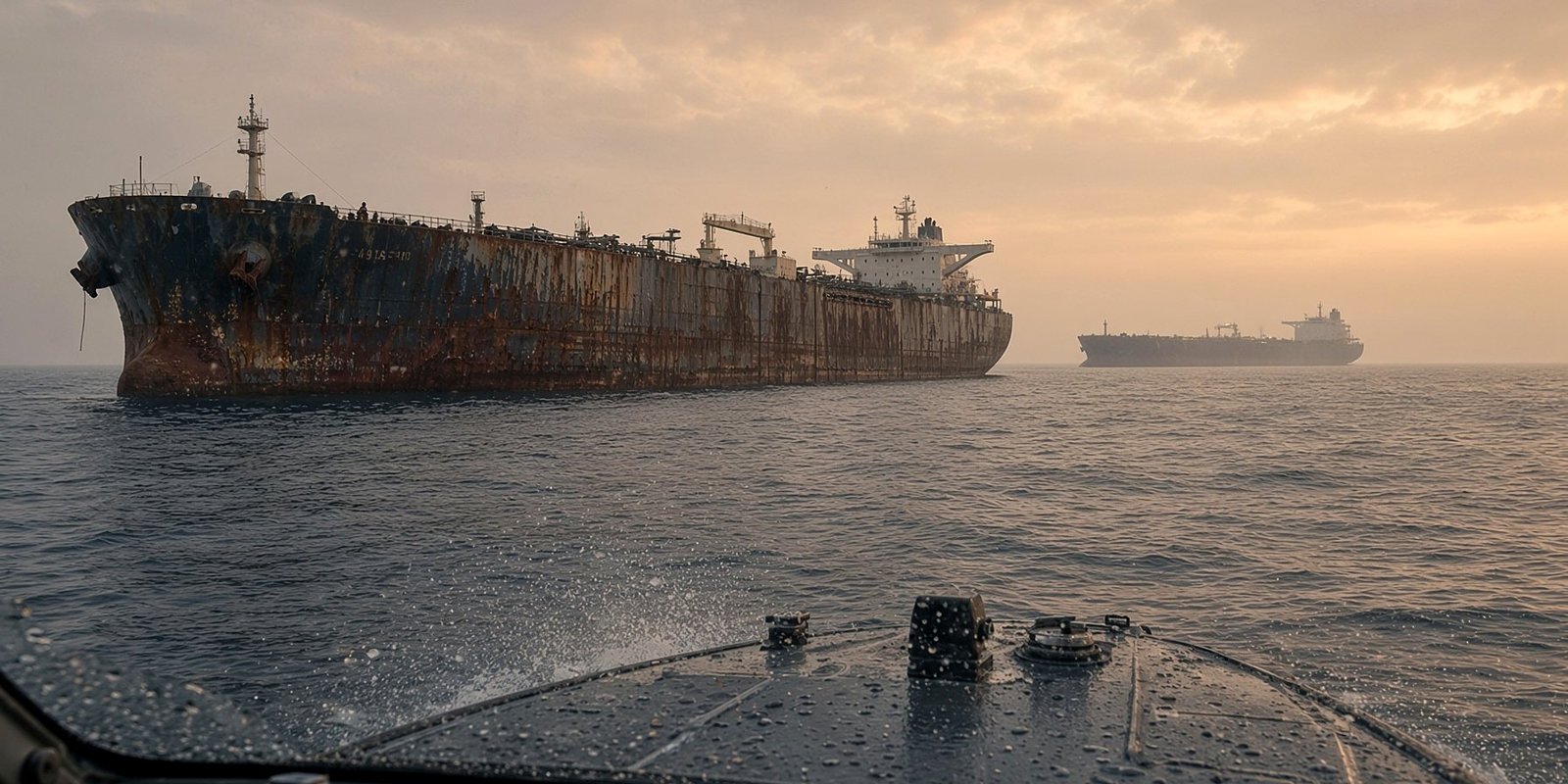
If you’re asking why gold isn’t rising during a war, the short answer is oil. The U.S.-Iran conflict has weighed on gold more than it’s supported it, because the crisis runs through energy prices rather than pure fear. As of July 20, 2026, the U.S. had hit Iran on nine consecutive nights, with a fresh wave of strikes and a tanker hit on July 15 (Kitco, StoneX, July 20, 2026). Yet gold sits near $4,057 an ounce, down about 25% from its January record. The gold Iran war story is a paradox. The same crisis that should bid the safe haven is also feeding the inflation that sinks it.
The mechanism: how war pushed gold down
Start with the chokepoint. The conflict stressed the Strait of Hormuz, the passage that carries a large share of the world’s seaborne crude. When oil supply looks threatened, the price jumps, and Brent peaked near $126 a barrel in March 2026. That’s where the chain reaction begins.
The path from a tanker in the Gulf to a lower gold price is short and mechanical:
- Oil up. Hormuz risk lifts crude and keeps it high.
- CPI up. Higher energy costs feed straight into inflation readings.
- Yields up. Sticky inflation forces bond markets to price higher-for-longer rates; the 10-year sits near 4.6%.
- Dollar up. Higher yields pull capital into the dollar, with DXY above 100.
- Gold down. A non-yielding asset loses appeal when real yields and the dollar both climb.
Gold pays no coupon. When you can earn more in Treasuries and the dollar is strengthening, the opportunity cost of holding metal rises. War premium or not, that math wins on most days this year.
Why isn’t gold rising during the Iran war?
Gold isn’t rising because interest rates, not geopolitics, are setting the price. The Iran war lifted oil, which lifted inflation, which lifted yields and the dollar, all headwinds for a metal that yields nothing. The safe-haven bid is real but smaller than the rate drag.
StoneX’s Rhona O’Connell has made this point directly, framing rates as the dominant driver even with the Middle East escalating. The move in yields since late winter tells the story on its own.
“The rise from below 4% at end-February to 4.6% now tells its own story, and provides a clear headwind for gold and, with its industrial bias, for silver.” Rhona O’Connell, Head of Market Analysis EMEA and Asia, StoneX, Kitco, July 20, 2026
This is the counterintuitive part for anyone who learned that gold and crisis move together. They usually do. In 2026 the crisis arrived wrapped in an inflation shock, and that changed the sign. Gold’s worst quarter since 2013 (down 14.1% in Q2) happened while the war headlines ran hottest.
The double edge of escalation
Here’s what makes this hard to trade. Escalation cuts both ways. Each new round of strikes adds a safe-haven bid, which supports gold. But it also threatens oil supply, which feeds inflation and hands the hawkish Fed another reason to stay tight. Those two forces fight each other inside a single gold quote.
The oil side of that trade has its own tail risk. TD Securities’ Bart Melek flagged how thin the crude cushion has become.
“With the Strait of Hormuz disruption eroding inventories to historically low levels, the key risk is that the oversold crude market could stage a sharp rebound.” Bart Melek, Head of Commodity Strategy, TD Securities, Kitco, June 29, 2026
A crude spike from here would reload the whole inflation chain and press gold again. So the war isn’t a clean bull signal for the metal. It’s a two-sided input, and right now the inflation side has the upper hand.
Even so, gold hasn’t caved. The metal defended support around $4,000 to $4,021 through the July strikes and still trades higher over the past year despite the Q2 drop (Kitco, July 21, 2026). That’s the safe-haven bid doing quiet work in the background. It’s cushioning the fall without reversing it. Strip the war out and gold might be lower still.
One more counterweight sits under the price. Central banks keep buying. A record 45% told the World Gold Council they plan to add to their own reserves this year, and China imported 692 tonnes through May, up 76% year on year (WGC survey, June 16, 2026). That official-sector demand has nothing to do with the war and everything to do with debasement worries. It’s the floor beneath the correction, which is why gold has drifted rather than crashed while yields climbed.
What a peace deal would actually do
Now flip it. A U.S.-Iran ceasefire sounds bearish for gold, since it removes the safe-haven premium. But it also removes the oil-driven inflation impulse, and that’s the more powerful lever. Lower crude means softer CPI, which means the Fed can ease off, which means lower yields and a weaker dollar. On net, peace could read dovish for gold even as the risk premium deflates.
- Escalation: safe-haven bid, plus an inflation and hawkish-Fed headwind. Mixed for gold.
- Peace deal: risk premium deflates, but the inflation impulse fades too. Net dovish for gold.
That’s the trap in trading this war off the front page. The obvious reaction is often backwards. A peace headline that dents gold for an hour may set up a stronger tailwind once the disinflation feeds through to yields.
What we’re watching
The signal to track isn’t the next strike. Watch the 10-year yield and the dollar instead. As long as the 10-year holds near 4.6% and DXY stays above 100, gold faces the same drag no matter what happens in the Gulf. Watch oil inventories too, given Melek’s warning about a rebound in an oversold crude market. And keep an eye on incoming CPI, since the inflation print is the hinge between the war and the gold price. For the fuller picture, see our gold price forecast for 2026 and our guide on how to buy gold.
Frequently asked questions
Why isn’t gold rising during the Iran war?
The war pushed oil higher, which lifted inflation and, in turn, yields and the dollar. Those are all headwinds for gold, which pays no yield. StoneX and others argue interest rates remain the dominant price driver in 2026, outweighing the safe-haven bid from Middle East escalation.
Doesn’t gold usually rise during a war?
Often, yes, when the crisis boosts fear without stoking inflation. This one is different because it runs through the Strait of Hormuz and oil. The energy shock feeds inflation and higher rates, and that rate drag has been larger than the safe-haven demand this year.
What would happen to gold if there’s a peace deal?
It’s double-edged. A ceasefire would deflate the safe-haven premium, but it would also remove the oil-driven inflation impulse, letting yields and the dollar fall. On balance that could be net dovish and supportive for gold, even though the risk premium disappears.
How high did oil go during the Strait of Hormuz crisis?
Brent crude peaked near $126 a barrel in March 2026 as the conflict threatened shipping through the Strait. TD Securities warns that with inventories at historically low levels, an oversold crude market could still stage a sharp rebound from here.
By the Commodities Unfiltered desk. Last updated July 2026.
This is market analysis, not investment advice.
Leave a Reply